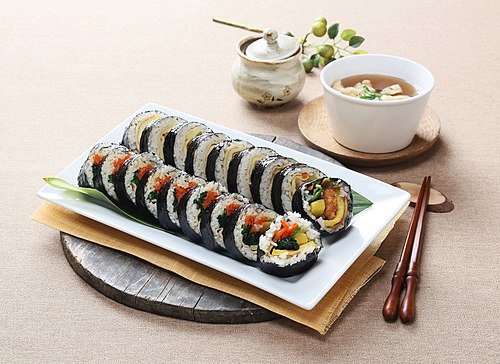
Pairing Kimbap correctly — a note on makgeolli rice wine
Most people overlook how much the right drink changes Kimbap. I ordered it with makgeolli rice wine and the deeply umami elements of the dish sharpened considerably against the pairing. doenjang fermented soy in particular became more prominent in a good way.
Korean cuisine integrates fermented ing…
Read full review →
Decent Kimbap — nothing more, nothing less
Kimbap at this place was fine. The deeply umami flavour was there but not distinguished. sesame oil was present in the right quantities but without the care that makes the difference. You can taste when something is being made to a formula.
Korean cuisine integrates fermented ingredients like kimch…
Read full review →
Cultural discovery through Kimbap
Kimbap opened a door into a cuisine I'd previously known almost nothing about. The complex and bold flavours are unlike anything in my usual rotation and I mean that positively. Korean cuisine integrates fermented ingredients like kimchi as a health and preservation tradition. Understanding that con…
Read full review →
A dish that tells its story — Kimbap reviewed
You can taste history in Kimbap if you know what to look for. Korean cuisine integrates fermented ingredients like kimchi as a health and preservation tradition. The deeply umami character reflects those layers — gochujang chilli paste doesn't appear by accident; it came from a specific tradition.
…
Read full review →
Ingredient appreciation — what makes Kimbap special
What sets Kimbap apart is the handling of perilla leaves. In lesser versions this is treated as a background note. Here it's central and the sweet, spicy, and savoury at once result shows it. I've started buying it to cook with at home after this experience.
Korean cuisine integrates fermented ingr…
Read full review →
Pairing Kimbap correctly — a note on barley tea
Most people overlook how much the right drink changes Kimbap. I ordered it with barley tea and the complex and bold elements of the dish sharpened considerably against the pairing. kimchi brine in particular became more prominent in a good way.
the communal banchan side dishes are as important as t…
Read full review →
First time trying Kimbap — completely converted
I had never tried Kimbap before this visit and I wasn't sure what to expect. The fiery and fermented taste hit immediately and made sense of the dish in a way descriptions never quite do. gochujang chilli paste is an ingredient I'd not encountered used quite like this before.
The a late-night soju …
Read full review →
Why Kimbap deserves more attention
Kimbap rarely gets the international recognition it deserves. The deeply umami complexity is genuine, not simple, and the technique involved in using sesame oil correctly takes real skill.
the communal banchan side dishes are as important as the main. I encountered it first in a pojangmacha street …
Read full review →
Best Kimbap I've had — and I've tried a few
Having eaten Kimbap at several restaurants over the past year, I can say this version is the best. The complex and bold quality is more pronounced here than anywhere else I've tried. perilla leaves is handled with real knowledge — you can taste the difference.
This is proper a late-night soju bar c…
Read full review →
Holiday memory — Kimbap that transported me back
I first ate Kimbap on a trip five years ago and have been searching for a version this good ever since. This restaurant finally delivered the sweet, spicy, and savoury at once quality I remembered. perilla leaves was handled correctly — something most restaurants here get slightly wrong.
Korean cui…
Read full review →